Estadio BBVA FIFA World Cup 2026: Schedule, Tickets & Travel Guide
Estadio Monterrey, the FIFA tournament name for Estadio BBVA, hosts four 2026 World Cup matches: three group stage fixtures and a Round of 32. One of three Mexican venues, it is the most modern. The biggest match here is June 29, when the Group F winner faces the Group C runner-up in a knockout that could pit Netherlands or Sweden against Brazil or Morocco.
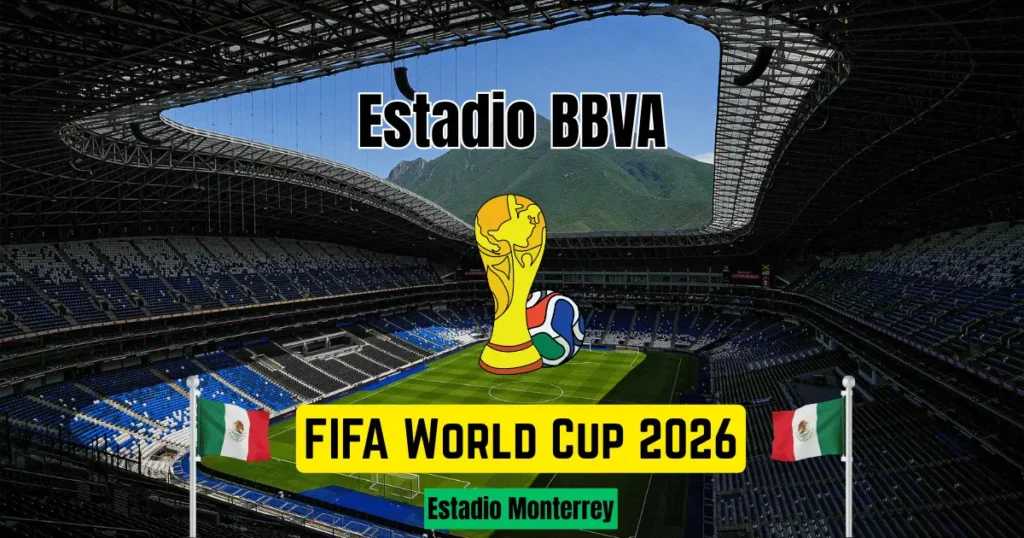
The stadium sits roughly 10 kilometers east of downtown Monterrey, with the jagged peak of Cerro de la Silla visible from the northwest stands on clear evenings. Its cantilevered steel exoskeleton earned it the nickname El Gigante de Acero, or The Steel Giant. At $200 million, it ranks as the most expensive football stadium ever built in Mexico. No other World Cup venue here comes close in terms of age or infrastructure.
This guide covers the match schedule, how to get to the stadium, where to stay in Monterrey and what to expect on match day.
Estadio Monterrey (Estadio BBVA): Quick Facts
| Location | Guadalupe, Nuevo León, Mexico |
| Opened | 2015 |
| Regular Capacity | 53,529 |
| World Cup Capacity | 50,113 |
| World Cup Matches | 4 (3 group stage, 1 Round of 32) |
| FIFA Tournament Name | Estadio Monterrey |
| Home Team | C.F. Monterrey |
| Key Match | Round of 32, June 29, 2026 |
Estadio Monterrey: Overview and History
Populous designed Estadio BBVA alongside Mexican firms VFO and Federico Velasco. Construction ran from August 2011 through July 2015 at a cost of around $200 million, replacing the aging Estadio Tecnológico that C.F. Monterrey had called home for 63 years.
The stadium opened on August 2, 2015, with Monterrey defeating Benfica 3-0 in the Eusébio Cup’s eighth edition.
The design draws directly from Monterrey’s industrial identity. A self-supporting steel exoskeleton wraps the entire structure, clad in metallic armature and aluminum panels. It became the first football stadium in North America to earn LEED Silver certification for sustainable design. FIFA’s commercial sponsorship rules strip the BBVA name: every broadcast and every piece of signage reads Estadio Monterrey from June through July.
For the World Cup, SIS Pitches installed a Tahoma 31 Bermudagrass surface reinforced with 5% synthetic fibre, supported by the SIS Air aeration system and a 35-unit irrigation network. The $7.2 million pitch project wrapped in July 2025. New Musco LED lighting replaced the old system, cutting energy use by over 40% and hitting FIFA Lighting Standard A.
World Cup 2026 Schedule at Estadio Monterrey (Estadio BBVA)
Estadio Monterrey hosts four matches between June 14 and June 29, 2026. All kick-off times below are verified against the full tournament schedule.
Group Stage Matches
| Date | Kick-off (CST / ET) | Group | Match |
|---|---|---|---|
| Sun, June 14 | 8:00 PM CST / 10:00 PM ET | Group F | Sweden vs Tunisia |
| Sat, June 20 | 10:00 PM CST / 12:00 AM ET (June 21) | Group F | Tunisia vs Japan |
| Wed, June 24 | 7:00 PM CST / 9:00 PM ET | Group A | South Africa vs South Korea |
Knockout Stage Match
| Stage | Date | Kick-off (CST / ET) | Match |
|---|---|---|---|
| Round of 32 | Mon, June 29 | 7:00 PM CST / 9:00 PM ET | Winner Group F vs Runner-up Group C |
Two of the three group games belong to Group F: Sweden, Japan, Netherlands and Tunisia all feature. The June 20 kick-off between Tunisia and Japan marks the 1,000th match in FIFA World Cup history.
The Group F standings update live once play begins. The Round of 32 brings in Group C: Brazil, Morocco, Scotland or Haiti. So the Steel Giant could host a Brazil knockout match depending on the group results.
Interesting Facts and Stadium Highlights
The Steel Giant nickname is literal: The exoskeleton is not decorative. It is the structural support for the roof and upper stands, all built from steel that references Monterrey’s history as Mexico’s industrial capital. The visual effect from the outside is unlike anything else in North American football.
First LEED-certified football stadium in North America: Estadio BBVA earned LEED Silver at opening in 2015 for its sustainable construction practices and energy systems. The World Cup lighting upgrade cut consumption another 40%.
Mountain views from the stands: The northwest sections face Cerro de la Silla, its peak at 1,820 meters. On clear evenings the upper tiers frame the mountain directly behind the pitch.
A stadium built for concerts too: Paul McCartney, Coldplay, Bad Bunny and Shakira have all performed here since 2015. The acoustic envelope designed for football works remarkably well for live music.
World Cup capacity sits lower than regular capacity: Media zones, broadcast infrastructure and FIFA operational areas reduce seating from the standard 53,529 to 50,113. Every host venue goes through the same reduction.
Travel Tips for Visiting Fans
Getting to the Stadium
Metrorrey Line 1 (the Rosa line) runs downtown to Exposición terminal in about 25 minutes. From there, the North Access gate is a 10 to 15-minute walk along Avenida Pablo Livas. Metro fare is under 10 pesos (less than $0.50 USD) paid with the Me Muevo card, loadable at any 7-Eleven or OXXO. Cash is not accepted.
Monterrey International Airport (MTY) is about 14.5 miles (23 km) from the stadium, a 25 to 35-minute drive in normal traffic. Uber and DiDi operate in Monterrey and beat street taxis for fixed pricing. Parking on Avenida Pablo Livas runs 100 to 150 pesos but fills fast. The metro is the better call.
Where to Stay
San Pedro Garza García, just southwest of central Monterrey, is the top pick for international fans. It has the best hotels, restaurants and feels safe on foot at night. Budget around USD $120 to 200 per night during World Cup weeks.
Barrio Antiguo near Macroplaza fills with supporters before and after matches. It has the best bars and street food in the city, sits on Metrorrey Line 1, and puts the Museo de Arte Contemporáneo (MARCO) within walking distance for non-match days.
Book accommodation now. Hotels within reasonable distance of the stadium were already 60 to 70% booked in early 2026, and Monterrey is one of the cheaper World Cup cities at around USD $40 to 70 per day for food and transport.
Weather Tips
June and July in Monterrey are hot and humid. Average highs sit around 92°F (33°C) with lows of 67°F (19°C) and humidity hovering at 63 to 64%. Evening kick-offs (the earliest starts at 7:00 PM CST) give some relief from peak afternoon heat, but the air stays warm. Carry water, wear breathable clothing and apply sunscreen even for evening matches. Monterrey’s summer sun is unforgiving until it drops behind the Sierra Madre.
After the Match
Most exits funnel toward the Exposición metro station on Avenida Pablo Livas. The metro runs late-night service on match nights, but the platform fills fast. Head back to Barrio Antiguo, where bars stay open past midnight with every match on screen.
What to Expect on Match Day
Gates open three hours before kick-off. Security at a venue this size can run 30 to 45 minutes on busy match days, so arrive early. FIFA’s standard bag policy applies: no bags larger than 30 x 20 x 10 cm, no glass, no outside food or drink. Sealed water bottles are in. No retractable roof, so dress for the evening heat.
C.F. Monterrey supporters rank among the loudest in Liga MX, and the cantilevered roof traps noise across all sections. Tunisia traveled with significant support to the 2022 World Cup and Japan’s fan base travels in large numbers. The June 20 Tunisia vs Japan fixture, the 1,000th match in World Cup history, will draw extra broadcast attention.
FIFA Fan Festival in Monterrey
Parque Fundidora hosts the official FIFA Fan Festival for all 39 days starting June 11. Entry is free with FIFA app registration. The park expects up to 120,000 visitors per day for live screenings, concerts and food. Organizers have called it the largest Fan Festival in World Cup history by daily capacity.
A Korean cultural day with K-pop performances is confirmed around the time South Korea plays its group matches, including the June 24 fixture at this stadium. Premium passes for dedicated viewing areas are available through the FIFA app.
How to Buy Tickets for Estadio Monterrey Matches
All official tickets sell through FIFA’s official ticketing platform. Group stage Category 3 seats start at USD $120 in general sale, with Category 1 running USD $700 or higher. The USD $60 Supporter Entry Tier goes exclusively through national federations and is not in open sale.
FIFA adds a 15% service fee at checkout. See the World Cup ticket guide for all pricing tiers. Secondary market listings run significantly higher, especially for the June 29 Round of 32.
Estadio Monterrey (Estadio BBVA) World Cup 2026: FAQs
What is the FIFA name for Estadio BBVA during the World Cup?
FIFA bans commercial sponsor names during the tournament. Estadio BBVA becomes Estadio Monterrey on all official signage and broadcast graphics from June through July 2026, then reverts after the tournament.
How many World Cup matches does Estadio BBVA host?
Four: three group stage matches (June 14, 20, 24) and a Round of 32 on June 29. The June 20 Tunisia vs Japan fixture is the 1,000th match in FIFA World Cup history.
Which teams play their World Cup matches at Estadio BBVA?
Sweden, Tunisia and Japan (Group F) all play here, while Netherlands plays elsewhere. South Africa and South Korea meet June 24 in Group A, which also includes Mexico and Czechia. The Round of 32 brings the Group C runner-up: Brazil, Morocco, Scotland or Haiti.
What is the best way to get to the stadium from downtown Monterrey?
Take Metrorrey Line 1 (Rosa line) to Exposición terminal and walk 10 to 15 minutes north to the stadium’s North Access gate. Cheapest and most reliable on match days. Parking is extremely limited and road congestion makes driving a last resort.
What is the World Cup capacity at Estadio BBVA?
FIFA confirmed 50,113 seats for World Cup matches. That is lower than the regular 53,529 because media zones and broadcast infrastructure take space. Every host venue shrinks similarly.
Is the FIFA Fan Festival in Monterrey free to attend?
Yes, general admission is free with FIFA app registration required. Daily capacity is 120,000 and entry will be managed once the limit is reached. Premium viewing areas carry a separate fee through the same platform.
Whether you follow Tunisia’s Group F campaign or hold out for the Round of 32 knockout on June 29, the Estadio BBVA world cup 2026 experience puts you in a stadium built to last, in a city that knows how to throw a football party.
The Steel Giant does not disappoint. For a full overview of every host venue across three countries, see the complete World Cup stadiums guide.