BMO Field World Cup 2026: Schedule, History, Facts, Travel Tips
Canada hosts the FIFA World Cup for the first time in 2026. Toronto welcomes six matches at BMO Field. This marks a historic moment for Canadian soccer.
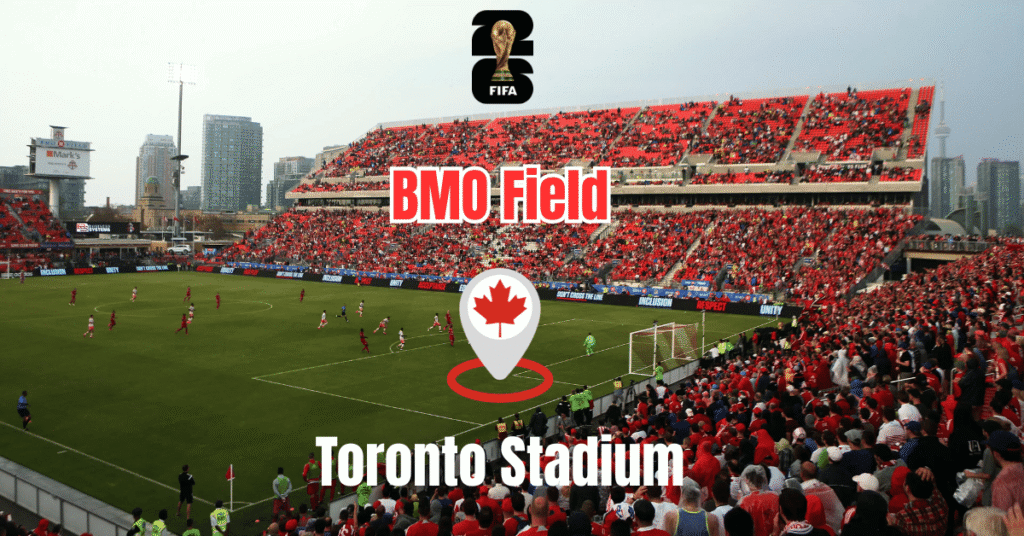
The stadium sits along Lake Ontario in Exhibition Place. You can reach it easily from downtown Toronto. BMO Field transforms into Toronto Stadium during the World Cup to meet FIFA naming requirements.
Canada plays their opening match here on June 12, 2026. This will be the first men’s World Cup game ever played on Canadian soil. The venue also hosts five more crucial matches through early July.
World Cup 2026 Schedule at BMO Field
BMO Field hosts six matches during the tournament. Five games happen in the group stage. One knockout match takes place in the Round of 32.
| Date | Group | Match | Time (ET) |
|---|---|---|---|
| Friday, June 12 | B | Canada vs UEFA Playoff A Winner | 3:00 PM |
| Wednesday, June 17 | L | Ghana vs Panama | 7:00 PM |
| Saturday, June 20 | E | Germany vs Ivory Coast | 4:00 PM |
| Tuesday, June 23 | L | Panama vs Croatia | 7:00 PM |
| Friday, June 26 | I | Senegal vs Intercontinental Playoff 2 Winner | 3:00 PM |
| Thursday, July 2 | Round of 32 | Group K Runner-up vs Group L Runner-up | 7:00 PM |
Canada’s match on June 12 carries special meaning for the entire country. The Canadian Men’s National Team plays their first home World Cup game. Fans have waited decades for this moment.
Germany faces Ivory Coast on June 20 in a Group E showdown. This match brings world-class talent to Toronto. Panama appears twice at BMO Field in Group L matches against Ghana and Croatia.
The July 2 knockout match closes Toronto’s World Cup experience. This Round of 32 game determines which team advances to the Round of 16. The winner continues their journey toward the final.
Also Check:
Interesting Facts and Stadium History
BMO Field opened on May 28, 2007. The City of Toronto built it for the 2007 FIFA U-20 World Cup and Toronto FC. The project cost $62.9 million Canadian dollars.
The stadium stands on historic grounds at Exhibition Place. This is the fifth stadium built at this exact location. Exhibition Stadium occupied the site before workers demolished it in 1999.
Toronto FC played their first match on April 28, 2007. The team lost 1-0 to Kansas City Wizards. The grand opening celebration happened two weeks later on May 12, 2007.
Key Stadium Details:
- Owner: City of Toronto
- Operator: Maple Leaf Sports & Entertainment
- Home Teams: Toronto FC (MLS) and Toronto Argonauts (CFL)
- Original Capacity: 20,000 seats
- Current Capacity: 30,000 seats (soccer)
- World Cup Capacity: 45,736 seats
- Surface: Natural grass with heating system
Bank of Montreal bought the naming rights. The stadium became known as BMO Field. Natural grass replaced artificial turf in 2010. A special heating system allows grass to grow during cold spring and fall months.
Major expansion started in 2014. Workers added an upper deck on the east side. This increased capacity to 30,000 seats for soccer matches. The project cost about $115 million.
A roof went up in 2016. Four tall corner pillars support the structure. The roof covers most of the permanent seats and protects fans from Toronto weather.
Major Events Hosted at BMO Field:
- 2007 FIFA U-20 World Cup Final (over 260,000 fans across 12 matches)
- 2014 FIFA U-20 Women’s World Cup
- 2017 MLS Cup (36,045 attendance – soccer record)
- 2016 MLS Cup
- 2010 MLS Cup
- NHL Centennial Classic 2017 (40,148 attendance – all-time record)
- 104th Grey Cup 2016
World Cup 2026 Upgrades:
The stadium now prepares for its biggest event yet. Toronto invests $146 million in upgrades. The City of Toronto pays $123 million. Maple Leaf Sports & Entertainment adds $23 million.
The stadium capacity expands to 45,736 seats for the World Cup. Workers add 17,756 temporary seats. This includes 10,000 seats on the north side and 7,000 on the south side.
Four new LED video boards replace older displays. A rooftop patio opens on the north side with space for 1,000 fans. This feature stays after the World Cup ends.
New VIP boxes and a center-field lounge create better hospitality areas. Locker rooms get complete renovations. The Wi-Fi network receives major upgrades throughout the stadium.
Travel Tips for Visiting Fans
Toronto offers excellent access for World Cup visitors. The city features world-class infrastructure and diverse accommodation options.
Airports
Toronto Pearson International Airport serves as the main gateway. The airport sits 25 kilometers from downtown. Pearson handles international flights from major global hubs. The UP Express train connects the airport to Union Station. Trains run every 30 minutes and take just 25 minutes.
Billy Bishop Toronto City Airport handles domestic flights. This smaller airport sits right downtown. You can walk to Billy Bishop through a pedestrian tunnel under the lake.
Getting to BMO Field
Public transit offers the best option for reaching the stadium. The venue sits less than 5 kilometers from downtown Toronto.
| TRANSPORT | ROUTE | TIME | NOTES |
|---|---|---|---|
| GO Train | Lakeshore West to Exhibition Station | 10 minutes from Union Station | 3-minute walk to stadium |
| TTC Streetcar | Routes 509/511 to Exhibition Loop | 20 minutes from Union Station | Direct to stadium |
| Walking | From Union Station | 45-60 minutes | From Liberty Village: 30 minutes |
| Rideshare | Uber/Lyft | 10-15 minutes | Expect surge pricing on match days |
The GO Train provides the fastest stadium access. Trains depart from Union Station every 30 minutes. The station sits just a three-minute walk from the stadium entrance.
Driving is not recommended. Parking near the stadium is limited and expensive. Public transit avoids these problems completely.
Where to Stay
Toronto provides over 130,000 hotel rooms. Options range from budget hostels to luxury properties.
Best neighborhoods for World Cup visitors:
- Liberty Village: Walking distance to stadium with restaurants and bars
- King West: Trendy nightlife 15-20 minutes from BMO Field
- Downtown Core: Financial District with excellent transit access
- Old Town: Historic charm with boutique hotels
- Scarborough/Etobicoke: Budget-friendly suburbs with GO Transit connections
Budget accommodations normally range from $80-150 CAD per night. World Cup demand will push these prices higher. Mid-range hotels typically cost $200-300 CAD. Luxury properties range from $350-700+ CAD per night.
Book your hotel early. Properties near the stadium and downtown fill quickly during the World Cup.
Fan Festival
Toronto’s official FIFA Fan Festival takes place at Fort York National Historic Site and The Bentway. These adjacent venues sit just west of downtown. The festival is free for everyone.

What to Expect:
- Large screens showing all World Cup matches (June 11-July 19)
- International food vendors
- Live music and dance performances
- Interactive activities and art installations
- Walking distance from BMO Field
Both locations connect easily via public transit. You can walk between the stadium and festival areas.
Local Tips for World Cup Visitors
Weather: Toronto weather in June and early July is warm. Temperatures typically range from 20-28°C (68-82°F). Pack light clothing and sunscreen. Bring a light jacket for evening matches.
Money: Canada uses the Canadian Dollar (CAD). Most places accept credit cards. ATMs are widely available.
Tipping: Restaurants expect 15-20%. Taxi and rideshare drivers expect 10-15%.
Must-Visit Attractions:
- CN Tower (stunning city views)
- Toronto Islands (beaches and biking)
- Distillery District (craft culture)
- St. Lawrence Market (fresh food)
- Kensington Market (vintage stores)
- Royal Ontario Museum
- Art Gallery of Ontario
Day Trip: Niagara Falls sits just 90 minutes away by car. This makes a great excursion between matches.
Match Day Tip: Allow extra time on match days. Arrive 2-3 hours before kickoff to avoid stress.
BMO Field Contact Information
- Address: 170 Princes’ Boulevard, Toronto, ON M6K 3C3, Canada
- Phone: (416) 815-5982 (Fan Services – Non-Game Day)
- Game Day Guest Assist: (647) 694-0403 (Text messaging service)
- Official Website: www.bmofield.com
- Email: Contact via online form at www.bmofield.com/venue-information/contact-us
- Seating Charts: www.bmofield.com/events/seating-chart
Economic Impact
The 2026 FIFA World Cup brings major economic benefits to Toronto. FIFA hired Deloitte Canada to assess the tournament impact. The December 2024 report projects strong returns for the city.
Economic Projections:
- Total Economic Output: $940 million (Greater Toronto Area)
- GDP Growth: $520 million
- Labor Income: $340 million
- Government Revenue: $25 million
- Jobs Created: 6,600+ (June 2023 – August 2026)
- Expected Visitors: 300,000+
The tournament creates jobs across multiple sectors. Construction jobs dominate the early phase. Tourism and hospitality expand significantly during the tournament. Security and event management also add positions.
The Soccer for All initiative receives over $2 million CAD in funding. This program builds local soccer fields and supports coaching programs. The World Cup creates lasting community benefits beyond the tournament.
Toronto’s Community Workforce Development Program targets diverse hiring. The initiative trains youth from Indigenous and Black communities. This creates workforce skills that last beyond 2026.
What Makes BMO Field Special
BMO Field is the smallest World Cup venue at 45,736 capacity. Fans sit close to the action. This creates an intense match experience you cannot find at bigger stadiums.
The lakeside location provides a unique setting. Lake Ontario views enhance the stadium appeal. Exhibition Place grounds carry over a century of history.
Toronto’s multicultural population adds special character. Over half of Toronto residents were born outside Canada. The city represents nations from around the world. This creates authentic international atmosphere during matches.
Canada’s first men’s World Cup match at home happens here. This historic moment resonates throughout the country. Canadian soccer fans have waited their entire lives for this opportunity.
The stadium was purpose-built for soccer in 2007. Sight lines were designed for the sport from the beginning. Football stadiums adapted for soccer cannot match this viewing experience.
Permanent upgrades extend benefits beyond 2026. The new video boards and Wi-Fi serve Toronto FC and Argonauts for years. The rooftop patio becomes a lasting legacy feature.
BMO Field welcomes the world in June 2026. The stadium undergoes major upgrades while preserving its intimate character. Toronto showcases its diversity and hospitality on the global stage.