Estadio Azteca FIFA World Cup 2026: Schedule, Tickets & Travel Guide
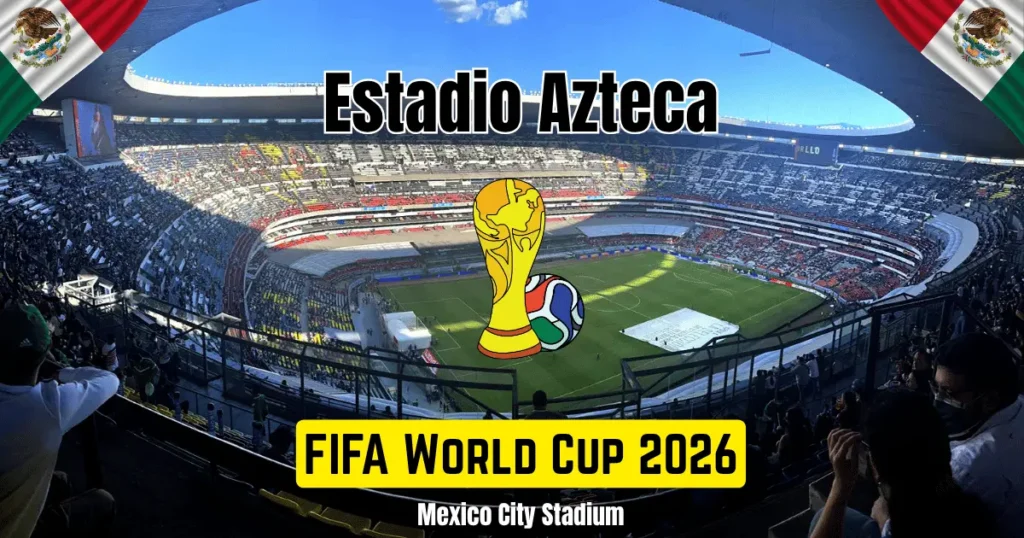
No stadium on earth carries the weight of Mexico City Stadium at the Estadio Azteca World Cup 2026. On June 11, Mexico kicks off the tournament against South Africa here, making this the first venue ever to host a World Cup opening match for the third time. Five matches total run through July 5, and the loudest crowd in the tournament will fill these concrete tiers for every one of them.
The stadium sits in the Coyoacán district of southern Mexico City, roughly 13 miles from Benito Juárez International Airport and about 45 minutes by public transit from the city center. One thing sets it apart from every other venue in this tournament: altitude. At 2,200 meters (7,218 feet) above sea level, Mexico City Stadium plays at heights that leave visiting players gasping and give Mexico a home advantage no other co-host enjoys.
This guide covers the match schedule, how to get there, where to stay and what to expect on match day.
Mexico City Stadium (Estadio Azteca): Quick Facts
| Location | Coyoacán, Mexico City, Mexico |
| Opened | May 29, 1966 |
| Regular Capacity | 83,000 |
| World Cup Capacity | 87,523 |
| World Cup Matches | 5 (June 11 to July 5, 2026) |
| FIFA Tournament Name | Mexico City Stadium |
| Commercial Name | Estadio Banorte |
| Home Teams | Club América, Cruz Azul, Mexico national team |
| Key Match | Opening Match, June 11, 2026 |
| Altitude | 2,200 m (7,218 ft) above sea level |
Mexico City Stadium: Overview and History
Mexico City Stadium opened on May 29, 1966, designed by architects Pedro Ramírez Vázquez and Rafael Mijares Alcérreca. The stadium debuted with a capacity exceeding 100,000. Over the decades, safety and comfort upgrades brought that number down, and a major renovation roughly a decade ago settled regular capacity at 83,000. The 2026 renovation restored and added seating, pushing the World Cup capacity to nearly 87,500.
During the World Cup, FIFA bans commercial stadium names. The venue goes by Mexico City Stadium in all official materials. Outside the tournament it carries the name Estadio Banorte, after Banorte purchased naming rights in March 2025 to help fund the renovations.
The renovation cost approximately $150 million USD. Workers installed a hybrid pitch, replaced seating, upgraded the sound system, added two large video screens, renovated the locker rooms and repaired the roof. The stadium reopened March 28, 2026 with Mexico drawing 0-0 with Portugal. Early reports flagged unfinished work still visible at reopening. The ESPN renovation report has the latest on what remains.
Estadio Azteca World Cup 2026 Schedule
Mexico City Stadium hosts five matches across three rounds, from the opening ceremony on June 11 through a Round of 16 tie on July 5.
Group Stage Matches
| Date | Kick-off (CT / ET) | Group | Match |
|---|---|---|---|
| Thursday, June 11 | 2:00 PM CT / 3:00 PM ET | A | Mexico vs. South Africa |
| Tuesday, June 17 | 9:00 PM CT / 10:00 PM ET | K | Uzbekistan vs. Colombia |
| Wednesday, June 24 | 8:00 PM CT / 9:00 PM ET | A | Czechia vs. Mexico |
Knockout Stage Matches
| Stage | Date | Kick-off (CT / ET) | Match |
|---|---|---|---|
| Round of 32 | Tuesday, June 30 | 8:00 PM CT / 9:00 PM ET | Group A Winner vs. Best 3rd Place (Groups C/E/F/H/I) |
| Round of 16 | Sunday, July 5 | 7:00 PM CT / 8:00 PM ET | Winner Match 79 vs. Winner Match 80 |
Mexico plays two of their Group A matches here, June 11 and June 24. The June 18 game vs. South Korea moves to Estadio Akron in Guadalajara. Check the full tournament schedule for all fixtures.
Interesting Facts and Stadium Highlights
Three World Cups: No other stadium in the world has hosted three FIFA World Cups. Mexico City Stadium becomes the first in 2026, having previously hosted the 1970 and 1986 tournaments. Every other venue in this tournament does it once. This one does it for the third time.
Two World Cup Finals: The stadium hosted the 1970 final (Brazil 4-1 Italy) and the 1986 final (Argentina 3-2 West Germany). That is more World Cup finals than any other venue on the planet. The 1986 final also featured Diego Maradona, who had scored his infamous “Hand of God” goal and the “Goal of the Century” in the quarterfinal against England at this same stadium just days earlier.
Altitude advantage: Mexico City Stadium sits higher than any other venue in this tournament. The thin air reduces oxygen availability by roughly 20 percent compared to sea level. Teams that train at altitude for weeks ahead of their matches here hold a genuine edge. Visiting players who arrive without that preparation often notice the difference in the first 15 minutes.
Hybrid pitch: The 2026 renovation introduced a new hybrid turf system combining natural grass with synthetic fibers woven into the surface. The technology improves durability and pitch stability under heavy use, and gives the playing surface a quality consistent with the top European venues that use the same system.
Largest in Latin America: Mexico City Stadium ranks as the largest stadium in Latin America and the eighth-largest association football stadium in the world. Size and history in one address.
Travel Tips for Visiting Fans
Getting to the Stadium
Take Metro Line 2 (Blue Line) to Tasqueña station, then transfer to the Tren Ligero south to Estadio Azteca station, a five-minute walk from the main entrance. Metro fare is 5 pesos ($0.30 USD) and Tren Ligero costs 3 pesos ($0.20 USD). The full trip from Roma or Condesa runs 45 to 60 minutes.
Rideshares and taxis work but expect significant traffic delays on match days, especially for evening kickoffs when rush hour overlaps with pre-match arrivals. The stadium has no practical pedestrian-friendly parking zone for visitors. Avoid driving.
Where to Stay
Roma Norte and La Condesa sit in the geographic middle of Mexico City and offer the best combination of location, access and atmosphere. Both neighborhoods pack in boutique hotels, cafés and restaurants along tree-lined streets. Rates during the World Cup will run higher than normal, especially for Mexico match weekends, so book early. Both neighborhoods connect directly to the Metro Line 2 corridor that takes you to the stadium.
Polanco suits fans looking for five-star hotels and upscale dining. It sits near the National Museum of Anthropology, worth a visit on rest days between matches. Luxury rates during match weeks run $300 or more per night.
Weather Tips
June and July fall squarely in Mexico City’s rainy season. Expect highs of 77-78°F (25-26°C) with morning sunshine giving way to afternoon and evening thunderstorms. Humidity averages 64-70 percent. Pack a light waterproof layer for every match, especially the evening kickoffs, when rain is most likely. The altitude also makes sunscreen essential for daytime arrivals.
After the Match
Exit the stadium at the final whistle to avoid the worst queues at Estadio Azteca station. The Tren Ligero runs extra service after matches, and once you reach Tasqueña the Metro moves efficiently. Bars and taquerías along Avenida Insurgentes Sur stay open late for post-match crowds.
What to Expect on Match Day
Gates open three hours before kickoff. Security queues move slowly at a stadium this size, so arrive early. FIFA’s standard bag policy applies: bags no larger than 30x20x10cm, no outside alcohol, no detachable-lens cameras.
The noise inside Mexico City Stadium reaches a different level when El Tri plays. The concrete bowl and cantilevered roof sections trap and amplify crowd sound in a way open stadiums cannot replicate. By the Mexican national anthem, the decibel level becomes something you feel as much as hear.
The stadium has no full roof, so dress for the weather. Concession stands sell food and soft drinks throughout the concourse, and alcohol is available under FIFA’s controlled service policy.
FIFA Fan Zones in Mexico City
The official FIFA Fan Festival runs at the Zócalo, Mexico City’s central historic plaza, from June 11 through July 19. Entry is free with registration through the FIFA app. The Zócalo gets a 510-square-meter LED screen, the largest Fan Festival screen among all host cities, and expects up to 100,000 fans on Mexico match days. Satellite events run across all 16 city boroughs throughout the tournament.
How to Buy Tickets for Mexico City Stadium Matches
All official tickets go through FIFA’s ticketing platform. Group stage prices start at $35 for Category 4 and run past $300 for Category 1. Knockout rounds cost more at every stage.
The June 11 opening match ranks among the hardest tickets in the tournament. See the complete ticket guide for pricing tiers, purchase limits and the resale process.
Mexico City Stadium World Cup 2026: FAQs
What is the FIFA name for Estadio Azteca during the World Cup?
FIFA bans commercial names during the tournament. The stadium goes by Mexico City Stadium in all official 2026 World Cup materials. Outside the tournament, the venue carries the commercial name Estadio Banorte after a naming rights deal signed in 2025.
How many matches does Mexico City Stadium host in 2026?
Five matches: three group stage games, one Round of 32 on June 30 and a Round of 16 on July 5. Track Mexico’s path through the Group A standings once play begins.
Which teams play at Mexico City Stadium?
Mexico plays two Group A matches here: June 11 vs. South Africa and June 24 vs. Czechia. Their June 18 game against South Korea is at Estadio Akron in Guadalajara. Uzbekistan vs. Colombia (Group K) is also here on June 17. Group K’s other teams are Portugal and DR Congo.
What is the best way to get from the airport to the stadium?
Benito Juárez International Airport (MEX) sits about 13 miles from the stadium, roughly 25-40 minutes by taxi or rideshare. Most fans base themselves in Roma or Condesa and use the Metro on match days rather than traveling from the airport directly to the stadium.
Does altitude affect matches at Estadio Azteca?
Yes. The altitude here is higher than any other venue in this tournament, and the thin air hits visiting players hard if they have not trained at elevation. Mexico plays here year-round, which gives them an advantage that does not show up on any team sheet.
Is parking available near Mexico City Stadium?
Parking near the stadium is extremely limited. Roads around the stadium get congested hours before kickoff on match days. Public transit, specifically the Tren Ligero from Tasqueña, is by far the most reliable option for reaching and leaving the stadium.
Mexico City Stadium stands in a category of its own at the Estadio Azteca World Cup 2026: the only venue in football history to host three World Cups, opening the biggest tournament on earth for the third time in June.
Check all 16 World Cup stadiums to plan your full tournament itinerary across three countries.